Posts

Target Students- What am I doing to facilitate accelerated learning?

What is happening? Using quick writes and fluency for my writing target students is great, but what can I do that will see more accelerated progress in all of my target students across the 3 subjects. If I look critically at what I am currently doing. It is nothing. I am trying some things. But it is not targeted and not enough.  I am seeing shift in my students based on data but I need to push them.  So: what can I do? Writing: Making sure I am sticking to my plan from my TAI. Ensure I am using the quick writes that work for the needs of my students. The quick sentence practice to get fluency at the stage is where they are at. (See TAI for this). Maths: To meet the needs of my target maths learners I am going to do 15 mins of SPRING into Maths for them at the start of every lesson.  While the other students are doing their warm up. I can do SPRING. It is a wonderful resource that is proven to boost learning in the area needed. So why am I not using it?  Th...

Teaching as Inquiry

Image
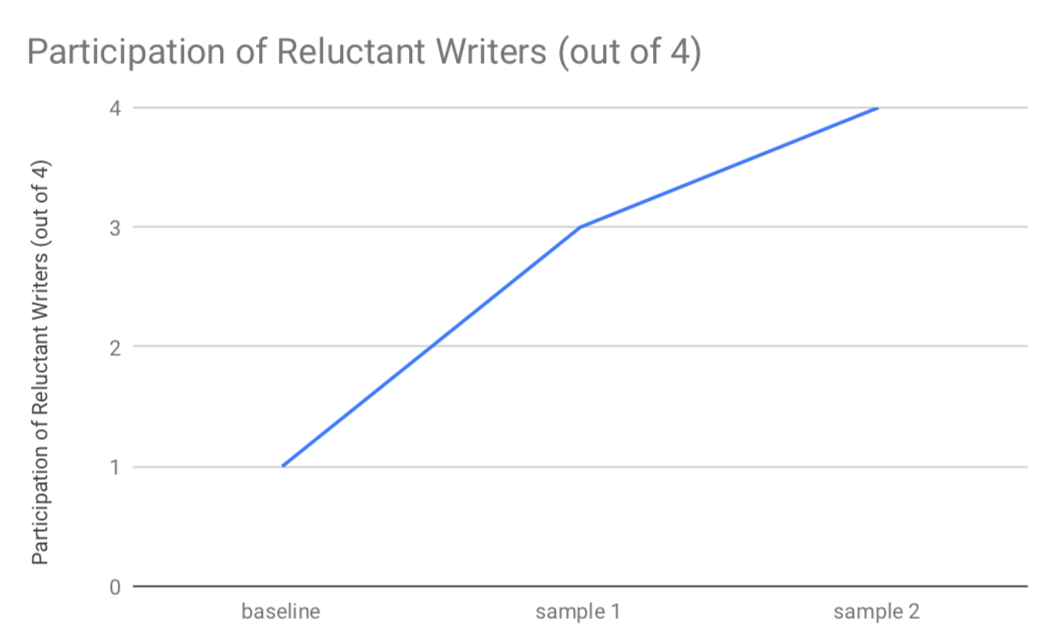
I have gone back to the beginning of the Inquiry cycle. The oral language activities have been working to help the students to understand the content at a deeper level and contribute to the lessons in a more interactive way. Now I need to work out what is next. I looked at their work and found my next 'Big Bang'. Soldier Brooklyn Stephone Maile Wiremu     Bronson What is happening? The students are now planning with many details and using those plans to organise sentences into paragraphs most of the time. By using quick writes and simple structured activities, I tested this out. They found the use of structure and vocabulary very easy, as well as articulating their ideas within a group and coming up with ideas. These students are able to generate ideas and build up a plan that will help them write. They are learning the different structures of things. Something that they all lack to varying degrees is the ability to consistently create sen...

Rumaki Action Plan

Rumaki = Immersion The plan for Park Estate School: TEACHERS Beginning in a week, have rumaki for the fist 5 mins of morning tea everyday.  (starting with baby steps).  For those 5 mins we will have to try and ONLY use te reo. That means if we can't say it- we need to try and work out how. GOAL: To have everyone using some te reo in conversation during kai te wa at P.E.S.  Giving it a go being the focus. Not fluent or perfect, but to remove the fear of trying. REWARDS: There will be biscuits available during rumaki time in the staffroom. Once rumaki is over, the biscuits disappear- hopefully this will entice some attendance- f we need to extend it to 10 mins, great. RESOURCES :  I have already made some labels/ sentences I know we will be needing to start with, then soon we can add/change them as we get better.  I will also bring in the phrase book. BUY IN: Hopefully the staff at P.E.S value the identity and language of our Maori tamariki enoug...

We can use the SWIVL!- Also, WODB in Ruma Wha

Revitilisation of Te reo- Kura Whakarauora- Notes and lessons

It takes 1 generation to lose a language and 3 to get it back. The secret to revitalisation is intergenerational language use.  (As a school teacher, what is my role in this step?- to assist the students to be more comfortable to use and learn it- they might be generation number 1?) MY JOURNEY- Focus on yourself and build from there. Support system: teachers and students at school. 25 year goal: have my students confidently speaking bilingually. TE REO MEANS TO ME- future of the students identity marker toanga identity revival UNESCO standards for judging a languages level of use: all of them come out as close to extinction. The language will never be 'lost' because it is written down- but it will be extinct soon if we can't get more than 2% of Nz using it. Just Korero More, just use what we have: DO NOT WORRY ABOUT PARTICLES OR SCREWING UP- Just give it a go. 5 Key elements of Language Planning: 1:Value --> give it Mana, what is your group in to? How...

Empowering my students through individual goals setting.

During term 1 I conferenced with the students and we identified our goals based on asttle and PAT testing.  We identified our strengths and weaknesses using a preprepared sheet based on the school progressions and the identified steps in the tests. Now that the students can identify their own next steps and tell me what they are I need to make it easier for them to choose lessons and activities that align with those steps. Fro maths I can quite easily help them to identify the number knowledge ideas they need from their student profile sheet.  This would need to be identified each week for them though. Or I could go through and write a list of what activities could help them for each sheet. It would take time, but it would be a useful resource for the year to come. Reading and writing I have sorted a sheet that they match with lesson- helping them to decide what session to sign up for.  The hard part is letting go of the process.  They can go through the proce...

MindLab Last Assessment

Image
My wider audience consists of teachers, students,  policy makers and researchers. My local audience includes future students to attend my school, teachers from the local intermediate (whom will receive my students in the next few years), and the Kootuitui cluster of schools (our local CoL), who will hopefully read and think about my research, especially if presented in a Toolkit. National audiences will include Manaaiakalani group. They employ teachers, principals, researchers at the University of Auckland and trust and accounts partners.  Everyone from the Manaaiakalani group are involved in policy development The audience that will benefit on possibly all local, national and international levels will be the future workforce I am sending my students into. Perspectives from these audiences include many cohesive opinions.  Teachers, students, local researchers and global policy makers have identified and discussed at length the need to give ...